
When Should You Get an Endoscopy?
Medically reviewed by Dr. Dan Wool, NMD
Arizona-licensed Naturopathic Physician and Gastroenterology Specialist
Updated: May 14, 2026
Quick Summary:
- An endoscopy is a camera-based procedure used to examine your digestive tract and is often recommended when symptoms like persistent heartburn, difficulty swallowing, or unexplained bleeding do not resolve on their own.
- Common reasons to get one include GERD, Barrett's esophagus, stomach ulcers, unexplained weight loss, gastrointestinal bleeding, and routine colorectal cancer screening starting at age 45.
- The procedure is generally safe and well tolerated, but it does carry small risks including perforation and bleeding, and it is contraindicated in certain high-risk patients.
- Alternatives to traditional endoscopy exist, including capsule endoscopy, CT colonography, and stool-based tests, and your provider can help you choose the best option for your situation.
Overview
Your gut is constantly talking to you. But when symptoms like chronic heartburn, difficulty swallowing, or blood in your stool start showing up regularly, it may be time to listen more carefully — and get a closer look.
An endoscopy is one of the most powerful tools gastroenterologists have to see exactly what is happening inside your digestive tract. It can catch problems early, confirm a diagnosis, and in some cases, even treat the issue during the same visit. But many people are unsure when the procedure is truly necessary, what it involves, and what risks they should know about.
This article walks you through everything you need to know about endoscopy, written from a naturopathic gastroenterology perspective that values whole-body context alongside evidence-based diagnostics.
What Is an Endoscopy?
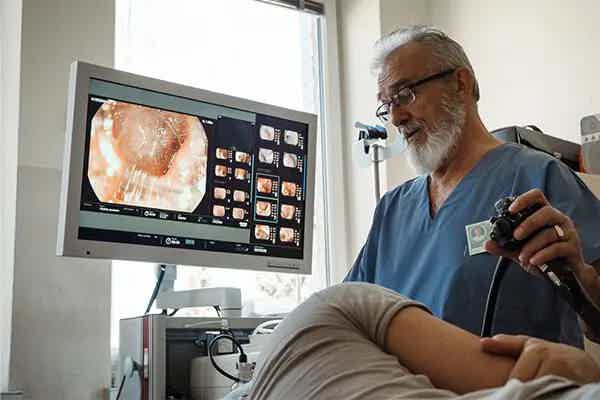
An endoscopy is a minimally invasive medical procedure that uses a thin, flexible tube equipped with a light and a small camera — called an endoscope — to examine the lining of your digestive tract.
There are two main types commonly performed:
- An upper endoscopy, also called an esophagogastroduodenoscopy or EGD, is inserted through the mouth and examines the esophagus, stomach, and the first part of the small intestine (the duodenum).
- A lower endoscopy, or colonoscopy, is inserted through the rectum and examines the large intestine (colon) and rectum. A sigmoidoscopy is a shorter version that looks only at the lower portion of the colon.
These procedures allow your provider to directly visualize the tissue lining of your GI tract, which is far more informative than imaging tests like X-rays or CT scans for certain types of problems.
Biopsies (small tissue samples) can also be taken during the procedure for laboratory analysis, and many therapeutic interventions — such as removing polyps or stopping bleeding — can be performed at the same time.
Benefits of Endoscopy
Endoscopy offers a range of diagnostic and therapeutic advantages that make it an indispensable tool in gastrointestinal medicine.
In short, seeing is knowing. Direct visualization is perhaps the most important benefit. Unlike imaging studies, endoscopy lets your doctor see the actual tissue and mucosa in real time. This allows for immediate identification of inflammation, ulcers, polyps, bleeding, and abnormal growths that might be missed otherwise.
Early cancer detection is another major reason endoscopy is recommended. Colonoscopy in particular is one of the most effective tools available for colorectal cancer screening. Polyps found during a colonoscopy can be removed right then, preventing them from progressing to cancer.
Accurate diagnosis of conditions like GERD, celiac disease, Barrett's esophagus, Helicobacter pylori infection, and Crohn's disease all benefit from endoscopic evaluation and biopsy confirmation.
Therapeutic capabilities mean that in many cases, your gastroenterologist can address a problem — such as cauterizing a bleeding vessel, dilating a narrowed esophagus, or removing a foreign object — without the need for surgery.
From a naturopathic perspective, endoscopy can also serve as an important baseline assessment. Understanding the structural and mucosal health of your GI tract allows for far more targeted natural therapies, whether that involves addressing gut dysbiosis, reducing inflammation, or supporting gut lining integrity.
Important Considerations of Endoscopy (Including Contraindications)
While endoscopy is considered a safe procedure overall, it is not without risk, and it is not appropriate for every patient or situation.
Common side effects following upper endoscopy include a sore throat lasting 1-2 days, mild bloating, gas, and temporary grogginess from sedation. These typically resolve without intervention.
More serious but less common complications include perforation of the GI tract, bleeding, and cardiopulmonary events related to sedation. A review published in PubMed found that bleeding and perforation occur in all types of endoscopic procedures and that older age, high anesthesia risk classification (ASA class), and sedation use are associated with higher complication rates. [1] A separate review in PMC noted that cardiopulmonary events account for over 60% of unplanned events during endoscopy and can be minimized through careful pre-procedure risk assessment and safe sedation practices. [2]
Contraindications — situations where endoscopy should be avoided or approached with extreme caution — include:
- Severe, uncontrolled cardiopulmonary disease (unstable heart conditions or severe respiratory compromise)
- Active esophageal perforation or suspected perforation
- Patients who are uncooperative or unable to give informed consent
- Patients with implantable cardiac defibrillators (ICD) in certain interventional settings (note: pacemakers are generally fine)
- Pregnancy, particularly in the first and third trimesters, unless there is a compelling medical need
- Severe coagulopathy (blood clotting disorders) when therapeutic intervention is planned
- Terminal illness where the results would not meaningfully change care
Always discuss your full medical history, all medications (including supplements and blood thinners), and any prior reactions to anesthesia with your provider before scheduling an endoscopy.
What Research Says About Endoscopy for Gut Health
The scientific literature supports a well-defined set of indications for both upper and lower endoscopy. A foundational review published in PubMed on the indications and contraindications for upper gastrointestinal endoscopy identified the most common diagnostic indications as dyspepsia unresponsive to medical therapy, difficulty swallowing (dysphagia), persistent gastroesophageal reflux symptoms, occult gastrointestinal bleeding, and surveillance for malignancy. [3]
Research also supports specific surveillance intervals for patients with known risk factors. A PMC review on follow-up endoscopy in gastroenterology found that in confirmed erosive or non-erosive reflux disease, follow-up endoscopy is indicated when complications or Barrett's esophagus are present. For patients with Barrett's esophagus, surveillance endoscopies are typically recommended every two to three years to monitor for dysplasia or early esophageal cancer. [4] For patients with ulcerative colitis lasting more than eight years, guidelines recommend annual or biennial colonoscopy to screen for colorectal cancer.
From an integrative standpoint, endoscopy provides objective data that naturopathic treatments can be built around. For instance, confirming intestinal villous atrophy via biopsy is essential for accurate celiac disease management. Similarly, identifying H. pylori through endoscopic biopsy allows for targeted eradication protocols that may include both conventional and botanical therapies.
What to Expect With an Endoscopy
Knowing what the procedure involves can significantly reduce anxiety and help you prepare appropriately.
Before the procedure, you will be asked to fast for at least six to eight hours. Your provider will review your medications, and you may be asked to pause blood thinners or anti-inflammatory drugs. You will also undergo a pre-procedure health screening, especially if sedation or anesthesia will be used.
On the day of your procedure, an IV line will be placed in your arm to deliver sedation medications. Most upper endoscopies are performed under moderate or deep sedation, meaning you will feel sleepy and relaxed but may not be fully unconscious. A local anesthetic spray is typically applied to your throat to minimize discomfort during the upper scope insertion.
The procedure itself is brief. An upper endoscopy typically takes 15 to 30 minutes, and a colonoscopy generally takes 30-60 minutes, though preparation the day before (using bowel prep) is required for colonoscopy.
After the procedure, you will rest in a recovery area for one to two hours until the sedation wears off. You cannot drive afterward, so you will need someone to take you home. Mild bloating, gas, and throat discomfort are common and typically resolve within one to two days. In some cases, your provider may be able to share preliminary findings with you before you leave.
Alternatives to Endoscopy
Traditional endoscopy is not always the only option. Depending on your symptoms, age, and risk profile, your provider may discuss the following alternatives.
- Stool-based tests, such as fecal occult blood testing (FOBT), fecal immunochemical testing (FIT), and stool DNA tests (like Cologuard), are non-invasive screening options for colorectal cancer. These are appropriate for average-risk individuals and are often used in younger patients before an endoscopy is recommended.
- CT colonography, sometimes called a virtual colonoscopy or coloscintography, uses CT imaging to create detailed pictures of the colon. It requires bowel prep but no sedation, though it cannot biopsy or remove polyps — making it a detection tool only.
- Capsule endoscopy involves swallowing a small, pill-sized camera that photographs the digestive tract as it passes through. This approach is particularly useful for evaluating the small intestine, which traditional endoscopy cannot reach. It is non-invasive and does not require sedation, though it has a small risk of retention in patients with known intestinal narrowing.
- Barium swallow and upper GI series are older imaging techniques that can outline the esophagus and stomach but do not provide direct visualization or biopsy capability.
- From a naturopathic standpoint, functional testing — including comprehensive stool analysis, breath testing for H. pylori or SIBO, and food sensitivity panels — can provide important complementary information. However, these do not replace endoscopy when structural evaluation or biopsy is needed.
The Bottom Line on Endoscopy
An endoscopy is a safe, effective, and often essential tool for diagnosing and managing a wide range of digestive conditions. You should discuss endoscopy with your healthcare provider if you have persistent heartburn, difficulty swallowing, unexplained abdominal pain, blood in your stool, unexplained weight loss, or a history of conditions like Barrett's esophagus, IBD, or a family history of colorectal cancer. For routine screening, most guidelines now recommend starting colonoscopy at age 45 for average-risk individuals.
That said, the decision to have an endoscopy should always be made with your full clinical picture in mind. A naturopathic approach ensures that whatever findings emerge are met with a personalized, integrative care plan — one that addresses not only the diagnosis, but the underlying contributors to poor gut health.
Frequently Asked Questions about Endoscopy
How do I know if I need an upper endoscopy vs. a colonoscopy?
Quick Answer: An upper endoscopy examines your esophagus, stomach, and upper small intestine. A colonoscopy examines your colon and rectum. The type you need depends on where your symptoms originate.
Full Answer: If you are experiencing heartburn, difficulty swallowing, upper abdominal pain, nausea, or vomiting, an upper endoscopy (EGD) is typically the right procedure. If you have lower abdominal pain, rectal bleeding, changes in bowel habits, or are due for colorectal cancer screening, a colonoscopy is the appropriate choice. In some cases, both may be recommended at the same visit. Your provider will evaluate your symptoms and medical history to determine which procedure — or combination — is most appropriate for your situation.
What symptoms should prompt me to request an endoscopy?
Quick Answer: Persistent heartburn, difficulty swallowing, blood in stool, unexplained weight loss, chronic nausea, or abdominal pain that doesn't improve with treatment are all reasons to discuss endoscopy with your provider.
Full Answer: While occasional digestive discomfort is common, certain symptoms warrant a closer look. These include heartburn or acid reflux that persists despite treatment, difficulty or pain when swallowing, visible or hidden blood in the stool, unexplained weight loss, persistent nausea and vomiting, and chronic abdominal pain. Age matters too — patients over 55 experiencing these symptoms are more likely to be referred for endoscopy. Younger patients may be evaluated first with non-invasive tests, but endoscopy may still be warranted based on severity or family history.
Is an endoscopy painful?
Quick Answer: Most patients feel little to no pain during the procedure due to sedation. Mild throat soreness or bloating afterward is common and typically resolves within a day or two.
Full Answer: Upper endoscopy is performed under sedation, so the vast majority of patients have no memory of the procedure and experience no significant discomfort during it. A local anesthetic spray is also applied to the throat before the scope is inserted. After the procedure, you may feel some grogginess, mild bloating or gas, and a slight sore throat. These side effects are temporary and usually resolve within one to two days. Cold foods and throat lozenges can help ease any throat discomfort. Overall, most patients are surprised by how straightforward the experience is.
What conditions can an endoscopy diagnose?
Quick Answer: Endoscopy can diagnose GERD, Barrett's esophagus, stomach ulcers, celiac disease, H. pylori infection, Crohn's disease, colitis, polyps, and early cancers of the digestive tract.
Full Answer: Endoscopy is one of the most versatile diagnostic tools in gastroenterology. An upper endoscopy can identify conditions including gastroesophageal reflux disease (GERD), esophagitis, Barrett's esophagus, hiatal hernia, stomach and duodenal ulcers, celiac disease, H. pylori infection, and esophageal or gastric cancer. A colonoscopy can detect colorectal polyps, early colorectal cancer, diverticular disease, inflammatory bowel disease (Crohn's disease and ulcerative colitis), and the source of lower GI bleeding. Biopsies taken during the procedure can confirm or rule out many of these conditions at the tissue level.
How often should I get a colonoscopy?
Quick Answer: For average-risk individuals, colonoscopy is recommended starting at age 45, with repeat screening every ten years if results are normal. High-risk individuals may need to start earlier and screen more frequently.
Full Answer: Current guidelines from major gastroenterology organizations recommend that average-risk adults begin colorectal cancer screening at age 45. If your colonoscopy results are normal, a repeat procedure is generally recommended every ten years. However, if polyps are found and removed, your provider will recommend a follow-up colonoscopy within three to five years depending on the number, size, and type of polyps. Individuals with a personal or family history of colorectal cancer, inflammatory bowel disease, or certain hereditary syndromes (like Lynch syndrome) should begin screening earlier and undergo surveillance more frequently, as determined by their gastroenterologist.
Can I refuse sedation and have an endoscopy without anesthesia?
Quick Answer: Yes, endoscopy without sedation is possible in some cases, though it is less common and generally more uncomfortable. Discuss the option with your provider based on your specific health profile.
Full Answer: While most endoscopies in the United States are performed with moderate or deep sedation for patient comfort, unsedated endoscopy is technically possible for some patients and in certain clinical settings. It may be considered for high-risk patients for whom sedation poses a danger, pregnant patients in certain trimesters, or patients who prefer to avoid sedation for personal or logistical reasons. Unsedated procedures tend to cause more discomfort, and many patients find the experience significantly less tolerable. If you are interested in this option, discuss it thoroughly with your provider so you understand what to expect and can make an informed decision.
Are there natural ways to prepare for or support recovery from endoscopy?
Quick Answer: A light, low-fiber diet in the days before, staying well hydrated, and supporting gut microbiome health after the procedure can complement your recovery. Always follow your provider's specific prep instructions first.
Full Answer: From a naturopathic perspective, there are several supportive strategies worth discussing with your provider. In the days before an upper endoscopy, eating lighter, easier-to-digest meals may help reduce gastric residue and improve visualization. For colonoscopy, adherence to the prescribed bowel prep protocol is essential — no herbal or natural substitute should be used in its place without approval. After the procedure, supporting gut microbiome recovery with probiotic-rich foods or a clinically appropriate probiotic supplement may be beneficial, particularly if antibiotics or significant interventions were involved. Always confirm any supplements or dietary practices with your naturopathic or medical provider before and after your procedure.
Are You Ready to Fix Your Gut?
Struggling with your gut health? Dr. Dan Wool offers personalized, natural solutions at his Scottsdale naturopathic practice. Book a free 15-minute discovery call today and take the first step toward lasting digestive relief.
Disclaimer:
For educational purposes only — not medical advice, diagnosis, treatment or advertising for consumer purchase. Dr. Dan Wool and affiliates make no effectiveness claims about supplements, hormones, peptides or other therapeutics beyond cited clinical evidence and regulatory approval. Always consult a qualified healthcare provider before starting, changing, or stopping any medical or wellness program.

About the Author
Dr. Dan Wool, NMD
Dr. Dan Wool is a naturopathic doctor who specializes in gastroenterology, hormones and men's health in Scottsdale, Arizona. Set up a free 15-minute discovery call with Dr. Wool today!
References:
[1] Gkolfakis P, Tziatzios G, Dimitriadis GD, Triantafyllou K. "Risk factors for complications and mortality related to endoscopic procedures in adults." Endoscopy. 2016;48(4):375–382. PubMed PMID: 26852762. https://pubmed.ncbi.nlm.nih.gov/26852762/
[2] Hayee B, Tham TC, East JE, et al. "Complications of diagnostic upper gastrointestinal endoscopy: common and rare – recognition, assessment and management." Frontline Gastroenterology. 2023;14(1):65–74. PMC PMCID: PMC9806027. https://pmc.ncbi.nlm.nih.gov/articles/PMC9806027/
[3] Eisen GM, Baron TH, Dominitz JA, et al. "Indications and contraindications for upper gastrointestinal endoscopy." Gastrointestinal Endoscopy. 1994;40(6):741–745. PubMed PMID: 8069470. https://pubmed.ncbi.nlm.nih.gov/8069470/
[4] Sieg A, Soehendra N. "Follow-up endoscopy in gastroenterology: when is it helpful?" Deutsches Ärzteblatt International. 2010;107(5):77–83. PMC PMCID: PMC2816788. https://pmc.ncbi.nlm.nih.gov/articles/PMC2816788/
Related Posts

What you need to know about a Hiatal Hernia
Understand hiatal hernia symptoms, practical relief strategies, and warning signs that need urgent care.

Bismuth's Role in Gut Health and Biofilm Disruption
Bismuth

Barrett's Esophagus: Causes, Symptoms, Treatments, and When to Seek Medical Help
Barrett’s esophagus is a reflux-related change in the esophageal lining. Learn the causes, warning signs, treatment options, and when to seek care.